
When organizations evaluate security providers, the conversation often starts with one question:
What is your hourly rate?
It is an understandable question. Security can represent a significant operating expense, particularly for organizations requiring multiple officers, around-the-clock coverage, mobile patrols, or specialized security personnel.
But focusing primarily on the hourly bill rate can overlook a much more important question:
What are you actually receiving for that rate?
A professional security contract should purchase far more than a person standing at a post in uniform. Behind every properly staffed security position should be an entire infrastructure designed to recruit, train, supervise, support, measure, and continuously improve the people protecting your organization.
At GSG Protective Services, we believe clients should evaluate the complete security operation—not simply the number of labor hours appearing on an invoice.
Recruiting Is Part of the Security Program
The quality of a security program begins long before an officer arrives at a client location.
Security companies must continuously recruit qualified candidates, conduct interviews, perform required screening and background processes, verify licensing requirements, complete onboarding, and determine whether an individual is appropriate for a particular assignment.
Not every security officer is appropriate for every environment.
An officer working in a corporate headquarters may require a different personality and skill set than someone assigned to a distribution center, shopping center, healthcare environment, residential community, government facility, or high-risk post.
Strong recruiting is therefore not simply an HR function. It is one of the first layers of risk management.
Training Cannot End With a Guard Card
Meeting minimum licensing requirements is only the starting point.
Security officers should understand their specific responsibilities, including site procedures, emergency protocols, report writing, customer service expectations, de-escalation techniques, access control procedures, incident response, and escalation requirements.
Depending on the assignment, additional training may also be necessary in areas such as workplace violence, active threats, medical response, fire and life safety systems, defensive tactics, technology platforms, or specialized client procedures.
Clients should ask themselves:
Is my security provider simply placing licensed personnel at my facility, or are they preparing those personnel to perform successfully at my facility?
There is an important difference.
Management Matters
Even excellent security officers require management support.
A well-run security program should have clearly defined leadership responsible for scheduling, staffing, employee performance, client communication, training, incident escalation, and corrective action.
When a problem occurs at 2:00 a.m., the client should not be wondering who is responsible for resolving it.
Strong security providers maintain an operational structure capable of responding when officers call off, incidents escalate, client requirements change, or unexpected conditions arise.
The officer may be the most visible part of the security program, but management infrastructure is what helps keep the operation functioning consistently.
Supervision Creates Accountability
There is an important distinction between placing an officer at a post and actively managing that officer’s performance.
Field supervision, post inspections, management visits, performance reviews, and ongoing coaching help ensure that expectations remain clear and standards remain consistent.
Without supervision, even well-written post orders, detailed On the – Job – Training (OJT), and strong policies can gradually lose effectiveness.
Supervisory visits also provide organizations with another layer of quality assurance by identifying issues before they develop into larger operational problems.
Technology Should Improve Visibility
Modern security operations increasingly rely on technology to provide greater transparency and accountability.
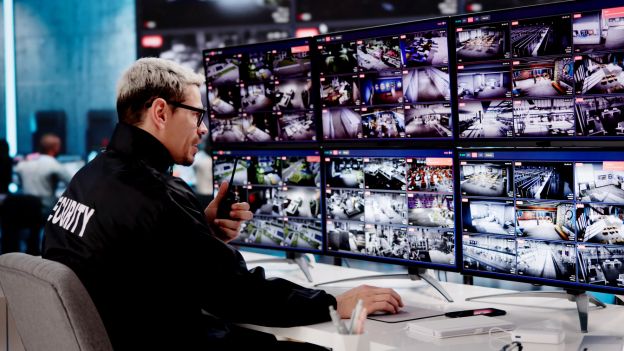
Guard tour systems, GPS verification, electronic daily activity reports, incident reporting platforms, mobile devices, access control systems, video surveillance, artificial intelligence, remote monitoring, and other technologies allow security teams to collect and communicate information faster than ever before.
The important question, however, is not simply whether the security company uses technology.
The question is whether that technology improves the security program.
Clients should be able to gain useful information from the data being collected. Patrol activity, recurring incidents, problem locations, response times, maintenance concerns, unauthorized access attempts, and other activity can reveal patterns that help organizations make better security decisions.
Reporting Has Real Value
Security officers frequently serve as the eyes and ears of an organization.
Daily activity reports and incident reports create an operational record of what occurred at a facility.
Those reports may later support internal investigations, insurance claims, workplace investigations, property management decisions, law enforcement inquiries, litigation, or risk-management reviews.
The quality of that documentation matters.
A professional security provider should place significant emphasis on accurate, timely, and objective reporting.
A poorly written report can weaken an otherwise well-handled incident.
A strong report can provide valuable information long after the event has occurred.
Compliance Happens Behind the Scenes
Security is a highly regulated and labor-intensive business.
Licensing, training requirements, wage-and-hour compliance, overtime, meal and rest requirements, insurance, workers’ compensation, employee records, client contractual requirements, and other regulatory obligations all require administrative infrastructure.
Clients may rarely see these systems operating, but they are part of what a responsible security provider delivers.
The lowest hourly rate may appear attractive until a provider lacks the administrative infrastructure required to consistently support the contract.
Accountability May Be the Most Important Thing You Purchase
Ultimately, clients should expect their security company to accept responsibility for the performance of the security program.
When something goes wrong, the answer should not end with:
“We will speak with the officer.”
The provider should determine what happened, why it happened, whether procedures were followed, whether supervision or training contributed to the issue, what corrective action is appropriate, and what changes can prevent the same problem from occurring again.
That is accountability.
And accountability is one of the most valuable components of any outsourced security relationship.
Look Beyond the Hourly Rate
Price will always matter. Organizations have budgets and security programs must be financially sustainable.
But security procurement should evaluate more than the difference between two hourly rates.
Organizations should ask potential providers about:
- Recruiting and screening
- Officer retention
- Training
- Management structure
- Field supervision
- Quality assurance
- Technology
- Reporting
- Compliance
- Emergency response
- Escalation procedures
- Performance measurement
- Corrective action
- Executive involvement
Because ultimately, a security contract should purchase more than labor.
It should purchase an infrastructure designed to reduce risk, protect people and property, support the client’s operation, and deliver accountability.
At GSG Protective Services, we believe the officer standing at the post is only one part of the solution.
Behind that officer should be an organization prepared to recruit them, train them, supervise them, support them, measure their performance, equip them with the right tools, and remain accountable to the client they serve.
That is what a professional security partnership should provide.

